
Running a restaurant or café is about much more than creating delicious food and providing excellent customer service. Behind the scenes, effective waste management plays a crucial role in keeping your business efficient, cost-effective, and environmentally responsible. With food waste making up a significant proportion of commercial waste, adopting smarter waste management practices can reduce operating costs, improve sustainability, and enhance your business’s reputation.
1. Reduce Food Waste at the Source
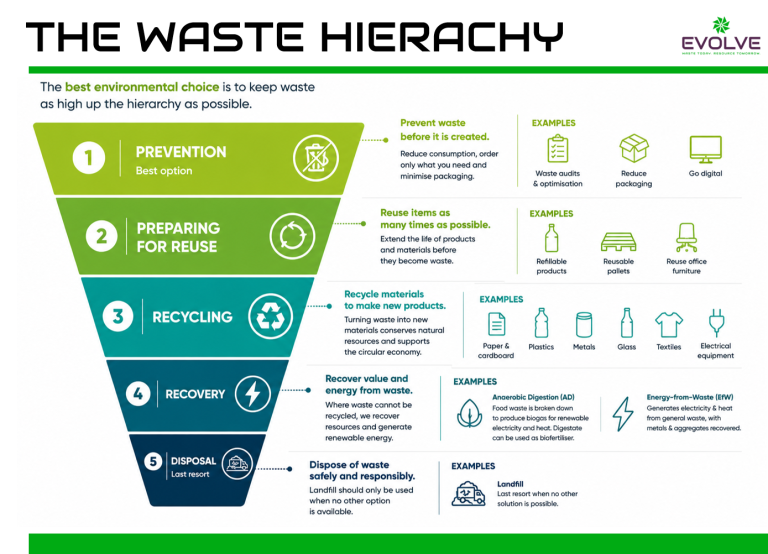
The best way to manage waste is to prevent it from being created in the first place. Regularly review your menu to identify dishes that generate excessive waste or use ingredients that often go unused. Monitoring customer ordering habits can also help you adjust portion sizes and reduce leftovers.
Accurate stock control is equally important. Ordering only what you need and using ingredients before they expire can significantly reduce unnecessary waste.
2. Follow the FIFO Method
The “First In, First Out” (FIFO) method ensures older stock is used before newer deliveries. By organising storage correctly and clearly labelling products with delivery or use-by dates, you can minimise spoilage and improve inventory management.
3. Separate Your Waste Properly
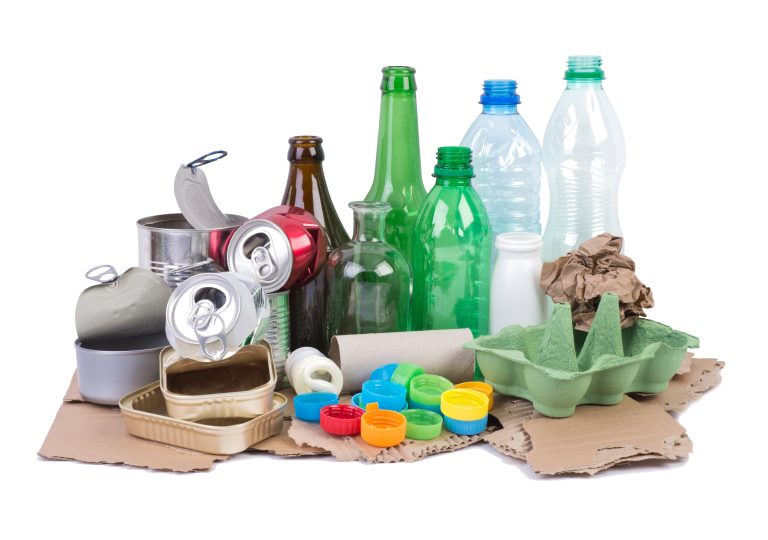
Mixed/general waste is more expensive to dispose of and reduces recycling opportunities. Provide clearly labelled bins for different waste streams such as:
- Food waste
- Cardboard
- Glass bottles and jars
- Plastic, paper and metal (dry mixed recycling)
- General waste
Training staff on correct waste separation helps increase recycling rates and reduces contamination.
4. Recycle Wherever Possible
Many materials commonly used in restaurants and cafés can be recycled. Flatten cardboard boxes, rinse recyclable containers where appropriate, and ensure glass and plastic are disposed of in the correct recycling bins.
Working with a reliable waste management provider can help maximise recycling while ensuring your business complies with local waste regulations.
5. Consider Food Waste Recycling
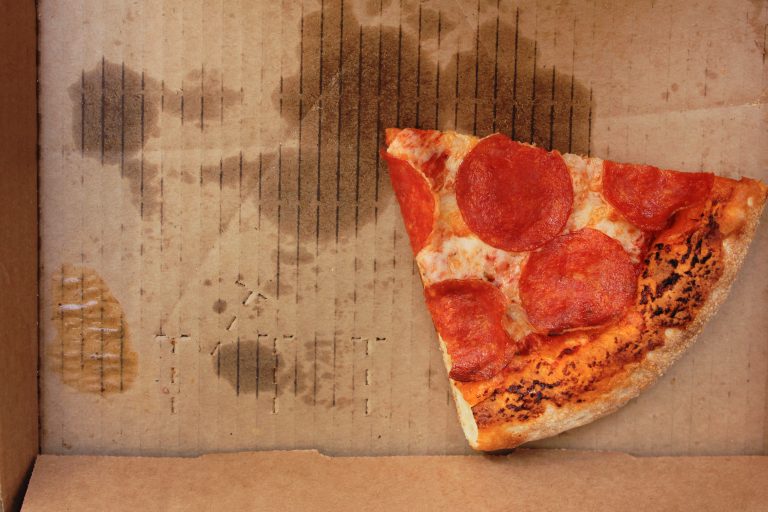
Food waste shouldn’t end up in landfill. Dedicated food waste collections can divert organic waste for composting or renewable energy production through anaerobic digestion.
Separating food waste from general rubbish also helps reduce unpleasant odours and improves hygiene around your premises.
6. Train Your Team
Even the best waste management plan won’t succeed without staff involvement. Regular training ensures employees understand what can be recycled, where different waste should be disposed of, and why reducing waste benefits both the business and the environment.
Encouraging staff to identify areas where waste can be reduced often leads to practical improvements across the business.
7. Review Your Waste Collection Services
Many businesses pay for waste collections that don’t match their actual needs. If your bins are consistently overflowing or only half full, it may be time to review your collection frequency, container sizes or waste segregation practices.
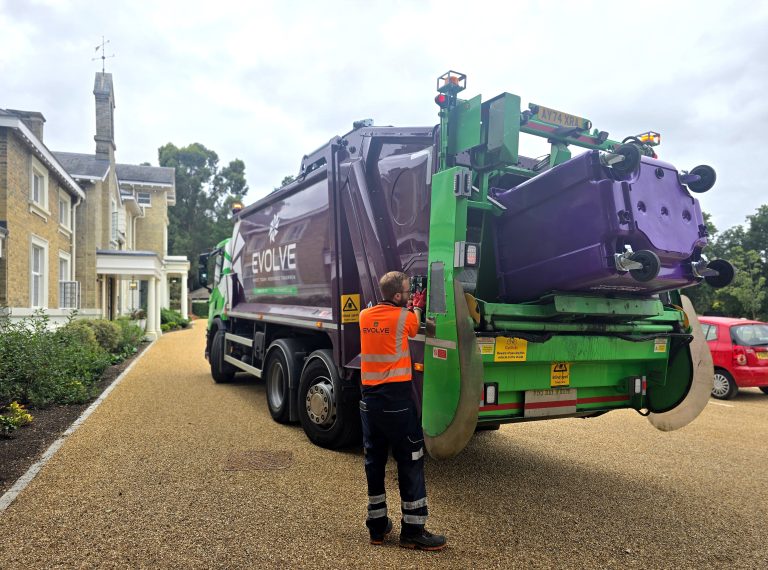
A professional waste audit can identify opportunities to reduce costs while improving recycling performance. At Evolve, all collections are recorded using state-of-the-art onboard weighing technology, giving customers accurate data on exactly how much waste is being collected from every lift. Combined with our detailed reporting and waste insights, this allows businesses to make informed decisions about collection frequencies, container sizes and recycling opportunities, ensuring they have the most cost-effective and efficient waste management solution possible.
The Benefits of Better Waste Management
Implementing effective waste management practices offers a range of advantages, including:
- Lower waste disposal costs
- Improved recycling rates
- Reduced environmental impact
- Cleaner, more hygienic premises
- Better compliance with waste regulations
- A stronger reputation with environmentally conscious customers
Waste management doesn’t need to be complicated. Small changes, such as improving stock control, separating recyclable materials, and educating staff, can make a significant difference over time. By taking a proactive approach, restaurants and cafés can reduce waste, save money and demonstrate a genuine commitment to sustainability.
Whether you run a small independent café or a busy restaurant, investing in better waste management today will benefit your business, your customers and the environment for years to come.
Is your current waste management solution working as hard as it could? At Evolve, we don’t just collect waste, we help businesses reduce costs, improve recycling performance and make informed decisions using real collection data and industry-leading reporting.
Whether you’re looking to review your current arrangements or explore a more efficient solution, we’d love to help! Contact us to learn more 03330 477 077 / sales@evolvewaste.co.uk