Food waste has moved firmly onto the compliance agenda for UK hospitality businesses. Under Simpler Recycling requirements, businesses producing food waste (including restaurants, cafes, pubs and hotels) now have clear obligations to separate it from general waste for collection. For an industry where food is the core of the business, this isn’t a minor administrative change; it touches kitchens, storage and daily routines.
The Legislation: What Changed in March 2025
Under the Simpler Recycling reforms, workplaces in England with 10 or more full-time employees (or full-time equivalents) have been legally required to separate food waste from general and dry recycling since 31 March 2025. This applies regardless of how much waste a business produces, and covers restaurants, cafes, pubs, hotels and any other hospitality business meeting the employee threshold.
The rules count total FTEs across the whole business, not per site, so a hospitality group with several smaller venues can still fall within scope if their combined headcount reaches 10. Businesses that don’t comply risk a compliance notice from the Environment Agency, with further enforcement action possible if that notice isn’t acted on.
What’s Coming in March 2027
Businesses with fewer than 10 full-time employees (classed as micro-firms) currently have a temporary exemption, but this ends on 31 March 2027. From that date, the same requirements apply across the board: food waste must be separated from general waste and dry mixed recycling, with no exemption based on size. No registration or application is needed for the current exemption, it simply ends on that date.
For smaller hospitality businesses, this makes 2026 a sensible year to start planning rather than waiting until the deadline. Getting the right containers and collection routine in place ahead of time avoids a last-minute scramble.
What’s Actually Required
In broad terms, hospitality businesses need to:
- Separate food waste from general and dry mixed recycling, rather than sending it all to one bin
- Arrange a dedicated food waste collection service, sized appropriately for the volume produced
- Keep waste properly stored between collections to avoid odour, pest and hygiene issues
- Maintain records of how waste is being managed, in case of an inspection
Why This Matters Beyond Compliance
Getting food waste separation right isn’t just about avoiding enforcement action. There are practical upsides too:
- Lower general waste costs. Food waste is heavy, removing it from general waste bins will reduce weight-based charges and the frequency you need those bins emptied.
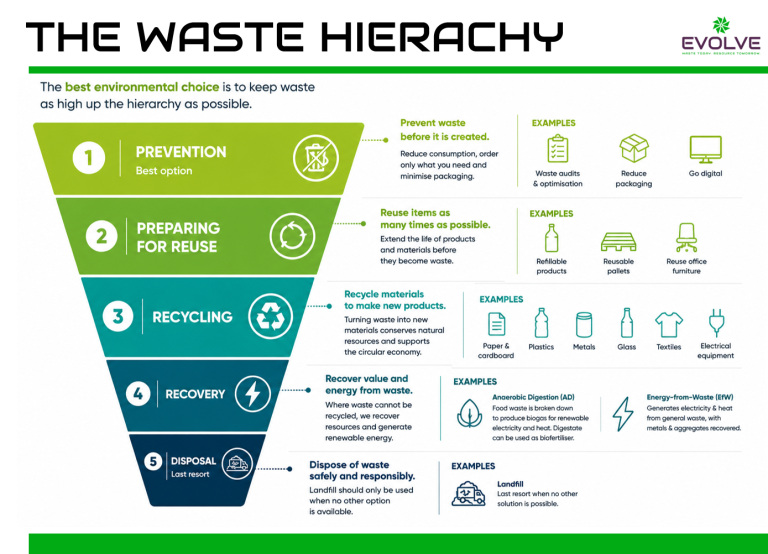
- Better environmental credentials. Separated food waste is typically sent to anaerobic digestion, generating renewable energy rather than going to landfill – a genuine sustainability story you can tell customers.
- Kitchen efficiency. Many venues find that once staff are separating food waste properly, they also get clearer visibility on where food is being wasted in the first place, which can reduce costs at the source.
Making the Switch Practical
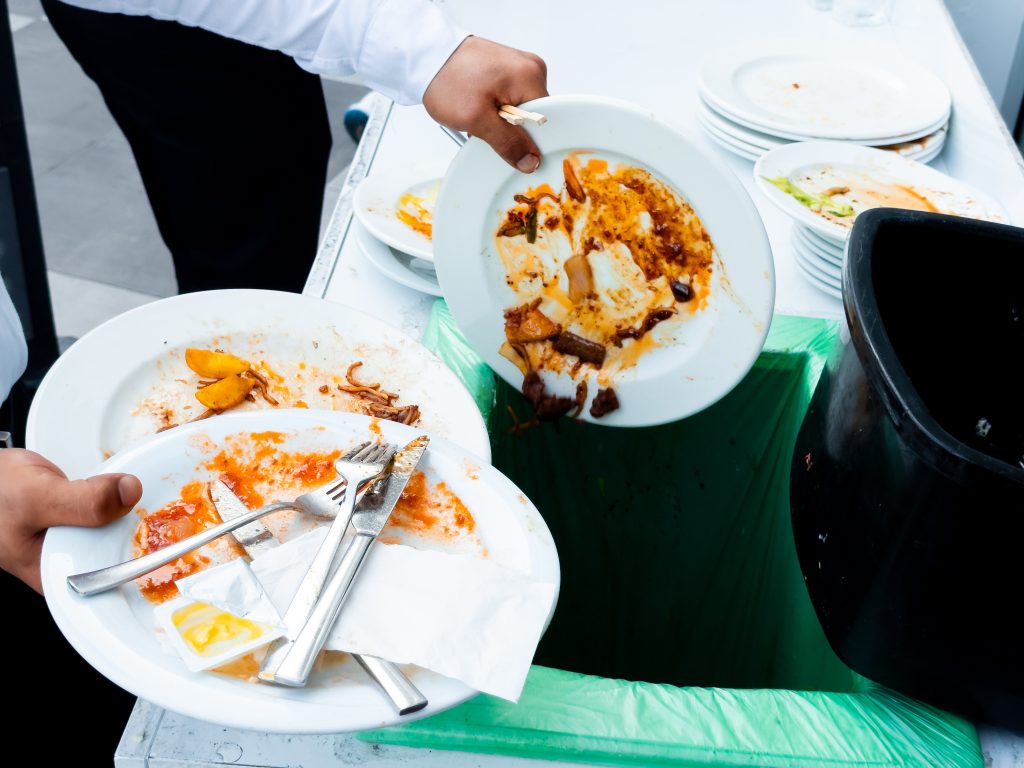
The businesses that adapt most smoothly tend to do a few simple things: clearly labelled and colour-coded bins in the kitchen, a quick team briefing on what goes where, and a collection schedule that matches how much food waste they actually generate rather than a generic default. Getting the container size and frequency right from the start avoids both overflow and paying for capacity you don’t need.
Need Some Advice?
Whether you’re looking to improve recycling rates, reduce waste management costs or build a more sustainable waste strategy, our experienced team is here to help.
At Evolve, we support businesses of every size, from independent SMEs to national multi-site organisations and blue-chip companies, providing tailored zero-to-landfill waste management solutions backed by one of the UK’s newest waste collection fleets, industry-leading reporting and exceptional customer service.
Get in touch with the Evolve team today
📞 03330 477 077