Commercial waste disposal works best when a business prevents avoidable waste, separates materials correctly, stores them securely and uses authorised waste collectors. This article explains how to turn those responsibilities into practical routines, from checking collection contracts to improving recycling at work. It focuses on businesses in England, with additional considerations for London premises; different rules apply elsewhere in the UK. (gov.uk)
The aim is a system your team can follow during a busy shift, not just a tidy bin area on inspection day.
What are a business’s responsibilities for commercial waste disposal?
Businesses in England must take reasonable steps to minimise waste, store it safely, use authorised waste carriers and document transfers appropriately. Passing rubbish to a contractor does not remove the need to check that it will be managed lawfully. These responsibilities apply to waste arising from commercial activity, including the business-related part of a home-based operation. (gov.uk)
For non-hazardous waste, each load leaving your premises needs a waste transfer note or another document containing the required information. Make one person responsible for checking paperwork, keep collection records, carrier details and service agreements together so staff know where to find them. Treat missing or inaccurate documentation as something to resolve immediately, rather than leaving it until the contract renewal.
Start with a practical waste audit
Before changing your commercial refuse collection service, establish what your business actually throws away. A waste audit helps identify where waste originates and provides a starting point for improvement. WRAP recommends auditing waste as part of setting up effective workplace recycling.
Choose a representative trading period and record waste without asking untrained staff to open bags or handle unfamiliar materials. Consider busy days, deliveries and seasonal activity rather than relying on one quiet afternoon.
Use a simple worksheet to capture:
- Source: Which department, activity or supplier generated the waste?
- Material: Is it cardboard, food, packaging, general rubbish or something requiring specialist assessment?
- Quantity: Record weights where available, or consistently estimate container fill levels.
- Collection pattern: Note overflowing containers, partly empty bins and missed collections.
- Possible action: Identify something to prevent, reuse, separate or investigate.
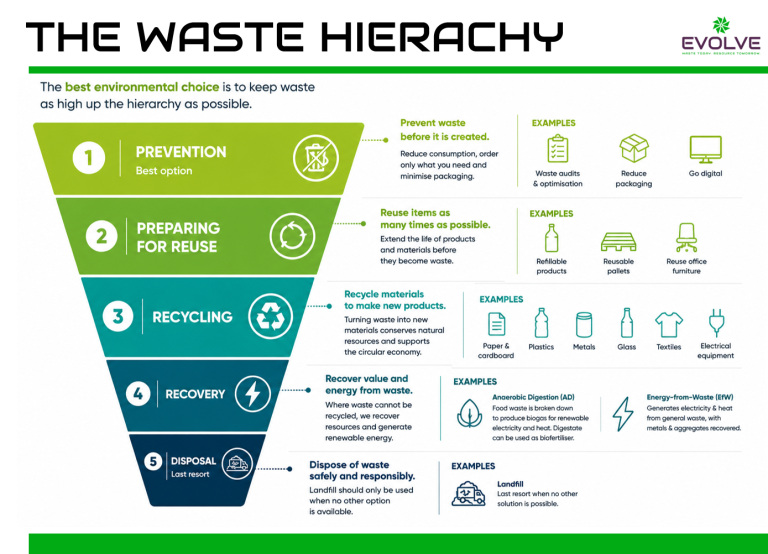
Then look upstream. Could purchasing order fewer short-life products, or could a supplier take back reusable packaging? Prevention should come before recycling in the waste hierarchy, so use the audit to challenge unnecessary waste rather than simply request larger bins. (gov.uk)
How should businesses separate waste for commercial recycling?
Workplaces covered by England’s Simpler Recycling requirements must separate dry recyclable materials, food waste and residual rubbish before collection. The rules took effect on 31 March 2025, while micro-firms with fewer than 10 full-time equivalent employees have until 31 March 2027. That employee threshold applies across the business, not separately to each location. (gov.uk)
Paper and card generally need collection separately from plastic, metal and glass. A collector can combine these streams where it has completed the required written co-collection assessment. Ask your provider to explain the arrangement for your premises rather than assuming one mixed recycling container covers everything. (gov.uk)
Build your commercial recycling collection around a written list of accepted materials and preparation instructions. Confirm which liners are suitable, how containers should be emptied and which items need another route.
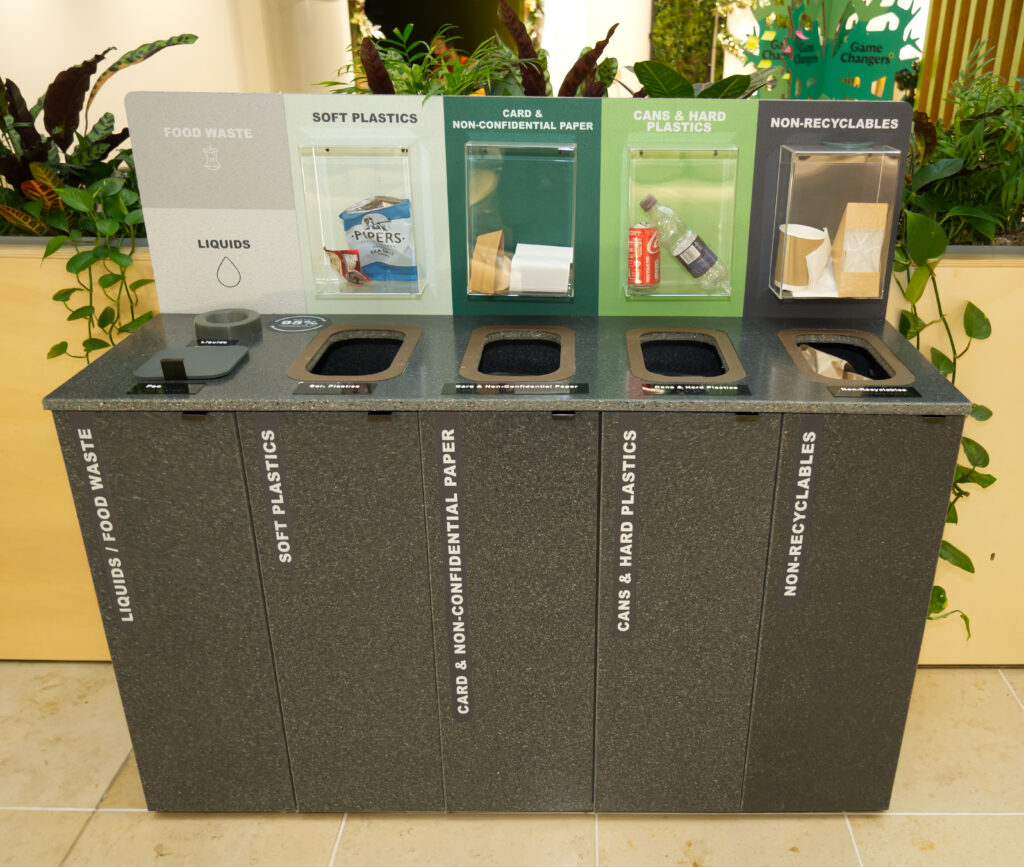
Put clear labels where decisions happen: beside kitchen bins, unpacking areas and customer disposal points. Use examples from your own premises rather than vague recycling symbols. Ask staff to flag uncertain items instead of guessing. An example of this is shown below, a custom internal recycling bin made by company co-cre8.
How do you choose a reliable waste collection provider?
Choose a provider by checking its authorisation, confirming where your waste will go and assessing whether the proposed service fits your premises. In England, the Environment Agency’s public register can be used to check waste carrier registration. Your duty of care also includes taking reasonable steps to ensure waste goes to an appropriately authorised destination. (gov.uk)
Give each prospective provider the same description of your waste streams, estimated quantities, access arrangements and collection needs. This makes proposals easier to compare without relying on a headline price.
Ask for written answers covering:
- Service scope: Which streams are included, and which require separate arrangements?
- Collection details: What container sizes, collection days and access requirements are proposed?
- Exceptions: What happens after a missed collection, rejected load or unexpected increase in waste?
- Charges: Are container rental, additional lifts, contamination charges or other fees applicable?
- Evidence: What transfer documentation and destination information will you receive?
- Contract terms: How do renewals, notice periods and service changes work?
For business refuse collection, agree who reports problems and how quickly you expect an acknowledgement. Ask the provider to explain any environmental claims and supply supporting evidence. Avoid treating a broad promise such as “sustainable disposal” as a substitute for a clear account of treatment routes.
Plan London collections around local restrictions
When arranging London commercial waste collection, check the rules for the specific borough and street. For example, the City of London restricts businesses from placing waste and recycling bags or loose cardboard on public highways and footpaths between 8am and 6pm, Monday to Sunday. That is a local requirement, not a rule to assume applies identically across London. (cityoflondon.gov.uk)
Before signing a contract, ask the provider to confirm that its collection window matches the applicable presentation rules. Agree where waste will wait beforehand and who will bring it out. For shared premises, document the landlord’s, tenants’ and contractor’s responsibilities so nobody relies on an untested assumption.
Include access details in the handover: loading arrangements, gate procedures, internal collection points and an alternative contact. Review these instructions whenever building access or opening hours change.
Train staff for the decisions they actually face
Build training around the waste people handle, not a lengthy generic presentation. Walk new starters through the relevant disposal points and ask them to explain where a few typical items belong. Include cleaners, temporary staff and anyone responsible for moving waste to the collection area.
Use short scenarios to uncover gaps:
- A delivery arrives with unfamiliar packaging: who confirms the correct stream?
- A recycling container is full: where should staff report it?
- A collection is missed: who contacts the provider and checks storage capacity?
Keep a concise instruction sheet near the working area. Revise it when packaging, collection arrangements or accepted materials change. Make reporting uncertainty a normal part of the process, rather than rewarding staff for disposing of everything quickly.
Review performance and prevent repeat problems
Set a regular review date and compare like-for-like periods. Consider tracking waste quantities, container fill levels, collection failures and total invoiced costs. Where a contractor provides recycling figures, ask how they were calculated and whether they describe your site or a wider service average.
Choose one practical improvement at a time. For example, investigate recurring food waste before changing collection capacity; WRAP recommends measuring food waste, setting a reduction target and taking action to prevent it (businessofrecycling.wrap.ngo). Record what changed, who owns the action and when you will assess the result.
Reliable waste management depends on consistent everyday decisions. Start with an audit, check your collection arrangements and make sorting straightforward. Then keep reviewing the system so commercial waste disposal remains a managed business process, not a recurring emergency.
Need Some Advice?
Whether you’re looking to improve recycling rates, reduce waste management costs or build a more sustainable waste strategy, our experienced team is here to help.
At Evolve, we support businesses of every size, from independent SMEs to national multi-site organisations and blue-chip companies, providing tailored zero-to-landfill waste management solutions backed by one of the UK’s newest waste collection fleets, industry-leading reporting and exceptional customer service.
Get in touch with the Evolve team today
📞 03330 477 077